From the weather sensor at the flying site to the readings on your screen. This is the equipment we build around, with a ready-made solar node or a node you assemble yourself.
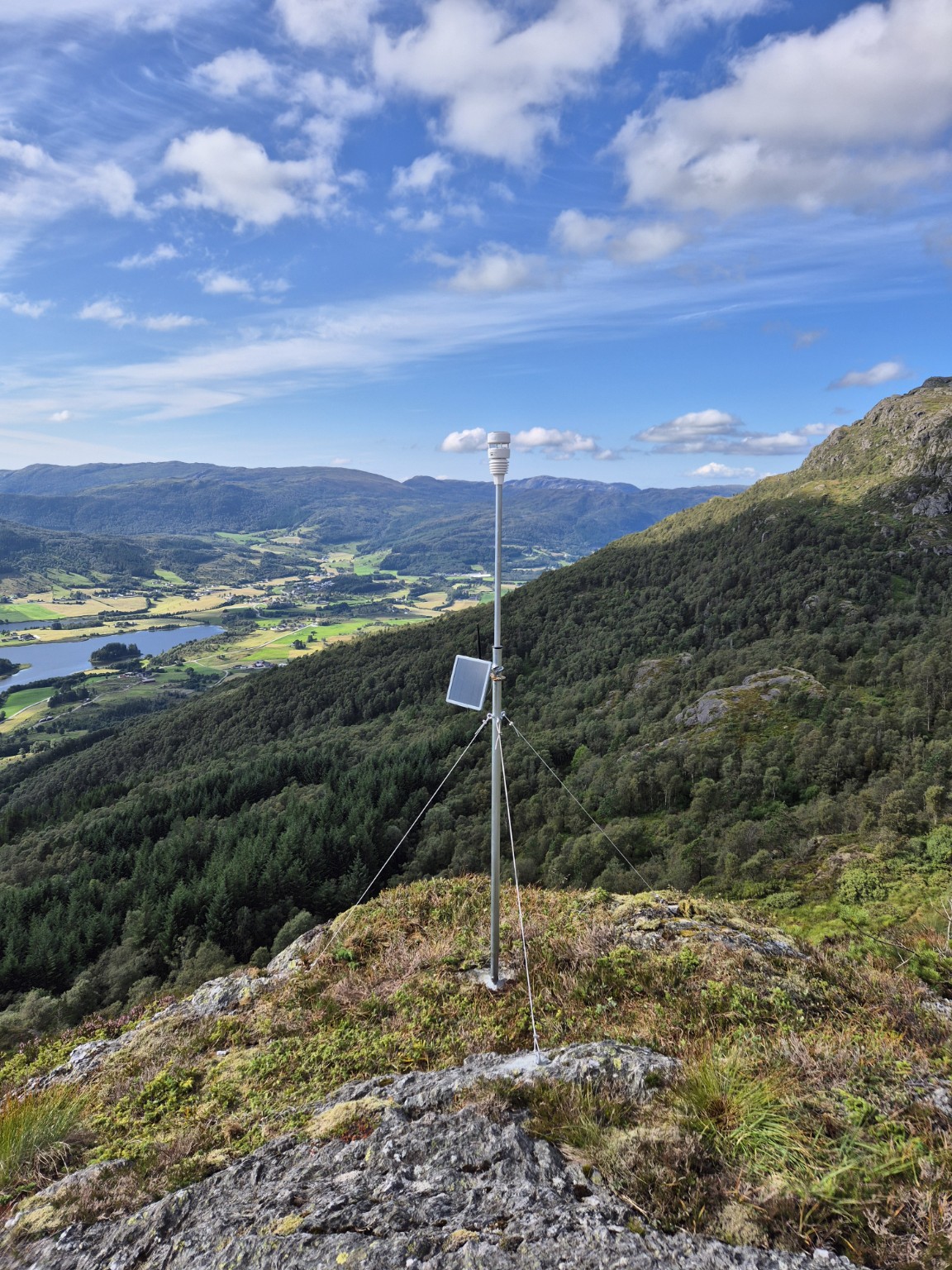
A compact 7-in-1 sensor with a built-in solar cell and battery backup. Wind is measured ultrasonically, without wind cups or a moving vane. Rainfall is recorded by a haptic rain sensor. The sensor mounts on a 25 mm diameter pole.
Wind
Speed, gusts and direction
Air
Temperature, humidity and pressure
Rainfall
Amount and intensity
Sunlight
Light intensity and UV index
Choose the right WS90. Bakvind radio nodes use the Bluetooth-enabled “Powered by Shelly” edition. The standard WS90 uses a different radio system.
The WS90 transmits its measurements wirelessly over Bluetooth. A nearby Bakvind node receives the broadcasts and captures the weather data. The expected range is up to 30 metres, but the node is normally mounted on the same mast as the sensor. The Bluetooth connection also allows other configurations.
Winter operation without heating. The WS90 has a built-in heater around the wind-measurement area. Ecowitt states that it requires an external 12 V supply and activates below 0 °C. The haptic rain sensor on top is not heated. Bakvind's battery-powered installations at remote sites do not use the heater. Snow and ice may therefore block the ultrasonic sensors, and reliable wind readings cannot be expected until the sensor thaws. Winter precipitation readings may also be affected.
We bought our sensor from a local online retailer. It can also be ordered directly from Ecowitt.
Installed next to the weather sensor. With Bakvind firmware, it receives measurements over Bluetooth and forwards them over LoRa radio.
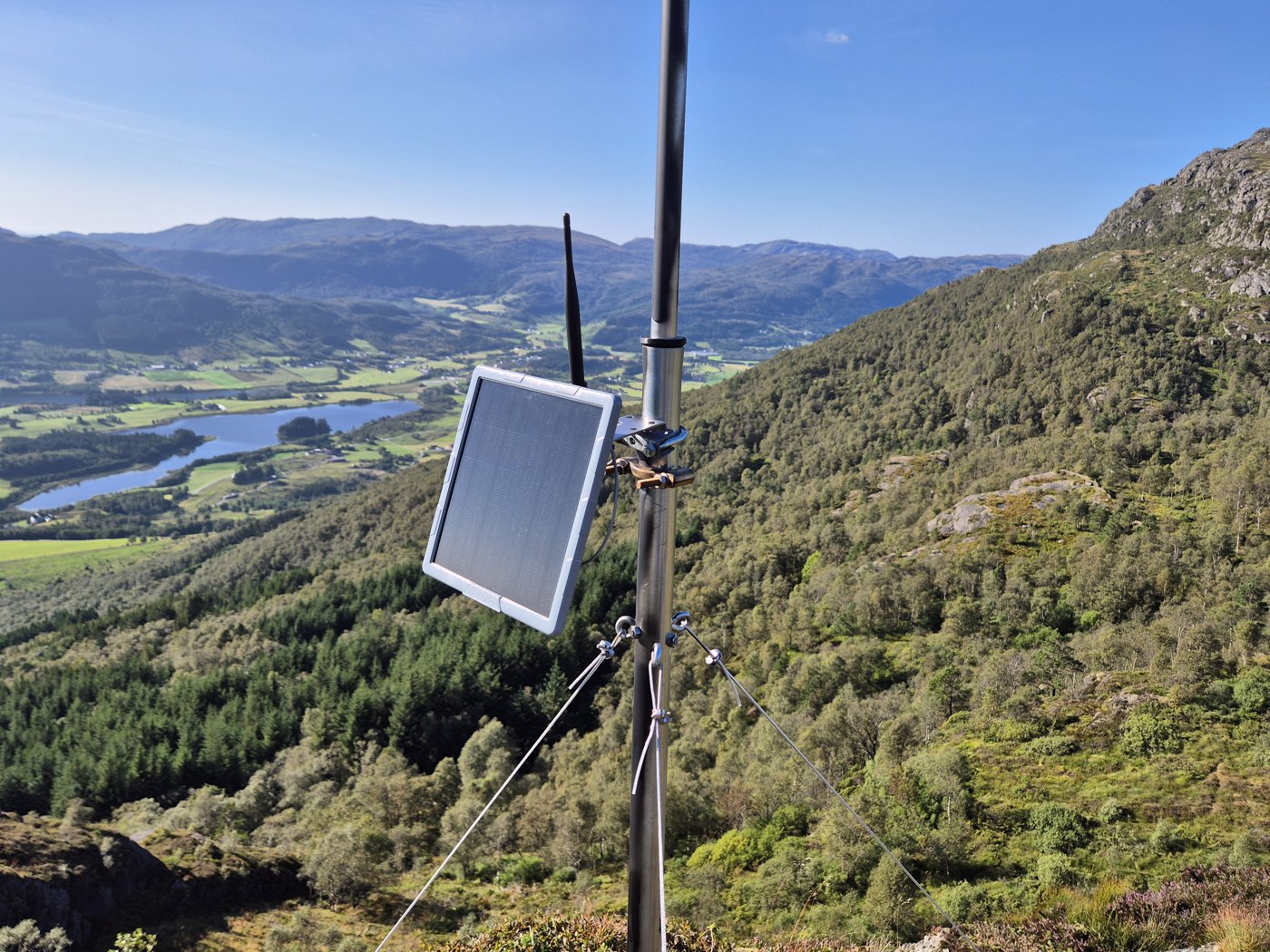
The solar panel and battery are combined in one outdoor unit. This is our preferred starting point when you want to spend less time building an enclosure and power supply.
It can act as a transmitter beside the sensor, a repeater without a sensor, or a repeater that also sends readings from its own sensor.
The SenseCAP Solar Node P1-Pro can be ordered directly from Seeed Studio.
A compact outdoor node with an integrated solar panel, a 3200 mAh rechargeable battery and an IP67 enclosure.
The Bakvind setup uses the 22 dBm variant with RAK4631. V2 is also sold in a 30 dBm variant with different hardware.
With Bakvind firmware, it can be used as a transmitter beside a weather sensor, as a repeater without a sensor, or as a repeater that also transmits readings from its own sensor.
These devices are also sold for other radio systems. To use them with Bakvind, they need the correct Bakvind firmware and configuration.
Sunlight, placement and radio connectivity go together.
When measurements need a relay
One node. Several roles.
Transmitter beside the sensor
Receives local weather measurements over Bluetooth and forwards them over LoRa.
Repeater without a sensor
Placed where it has radio contact in both directions, relaying measurements from other nodes.
Repeater with a sensor
Relays other nodes’ measurements while also sending weather data from the sensor at its own location.
A repeater is only needed when the radio path requires one. It does not provide internet access; that is the gateway’s job.
03 / Gateway with Wi-Fi
From radio to the internet.
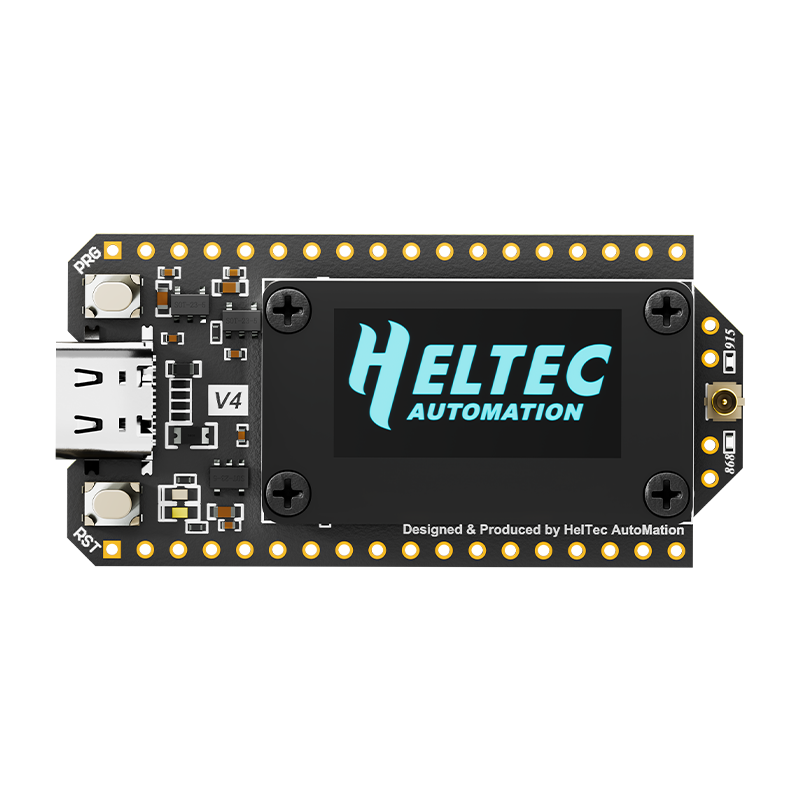
The gateway receives LoRa messages and sends them to Bakvind.no. It is placed where there is permanent power, Wi-Fi with internet access and radio contact with the nodes. The Heltec WiFi LoRa 32 V4 is our recommended gateway.
Choose the version with an OLED display. The display shows gateway status information.
Heltec WiFi LoRa 32 V4 and Bakvind's own 3D-printed gateway enclosure.
Recommended gateway
Heltec WiFi LoRa 32 V4
A compact gateway platform with an ESP32-S3, an SX1262 radio for 868 MHz, Wi-Fi and an OLED display. The gateway uses permanent power and connects the radio network to Bakvind.no over the internet.
Bakvind has developed a compact 3D-printed enclosure specifically for the Heltec WiFi LoRa 32 V4. To lower its centre of gravity, the base has snap-in mounts for two M10 nuts used as ballast. This makes the gateway more stable and reduces the risk of it tipping over, especially when used with a longer antenna.
The 3MF file is prepared for Bambu Studio and can be downloaded below.
The WiFi LoRa 32 V4 can be ordered directly from Heltec. Make sure to select the V4 with the correct frequency variant and OLED display.
The sensor needs unobstructed wind. The node needs sunlight and radio contact. A stable mast with suitable guy wires keeps the equipment in place.
We build the mast from available parts and adapt its height, mounting and guy wires to the location. The sensor and radio antenna have different needs; both need a suitable position.
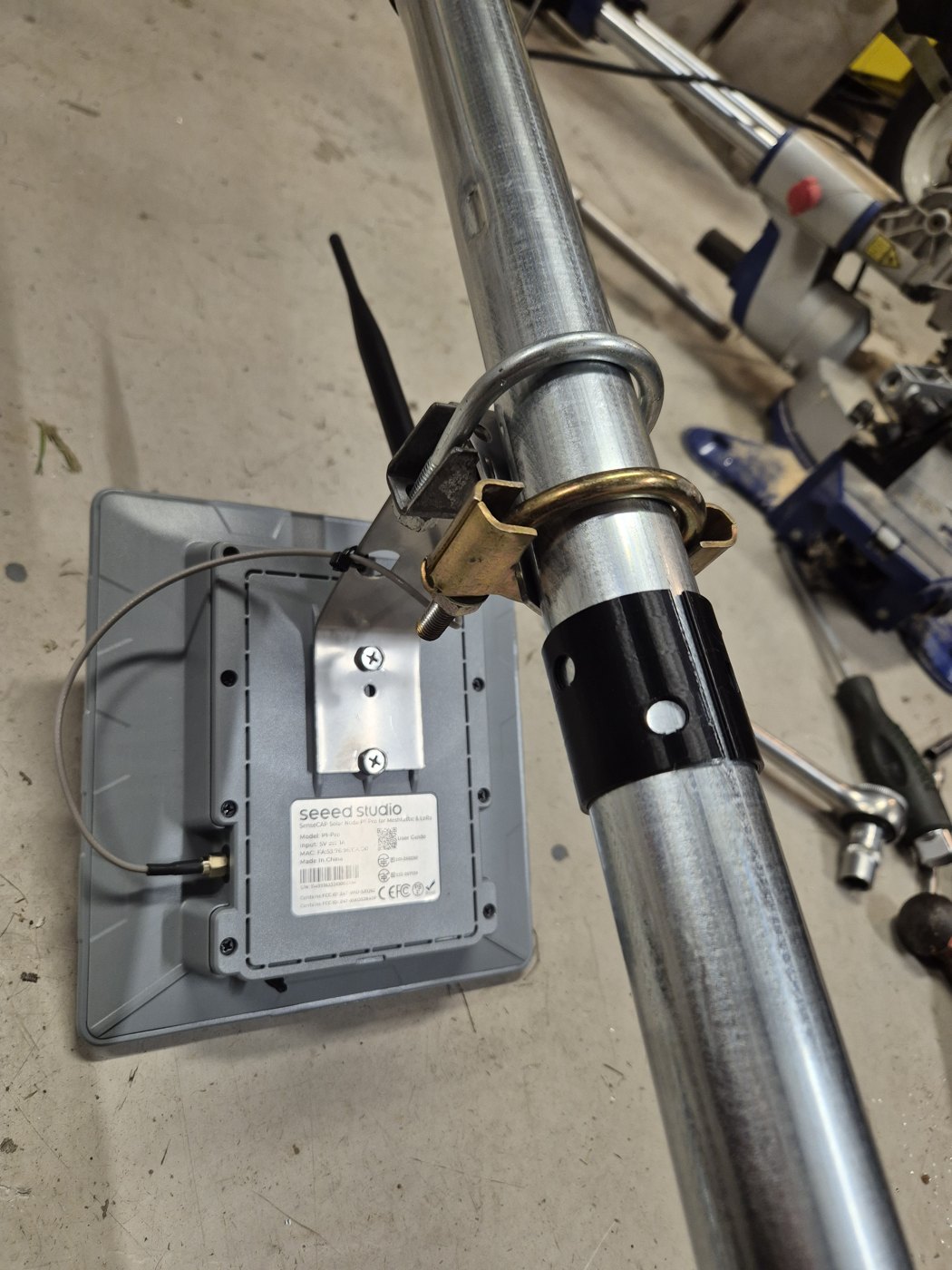
From the workshop to the flying site. A detail from the project’s mast construction. Mountings, cables and enclosure must withstand the weather and remain accessible for maintenance.
Before choosing equipment
A few practical questions.
Parts you cannot find at local online retailers can usually be ordered directly from the manufacturer or through AliExpress and eBay. Check that the model and variant match your intended setup.
Does the flying site need mobile coverage?
No, not when using a radio link. The weather station needs radio contact with a gateway, directly or via a repeater. The gateway needs internet access. Terrain and placement determine whether the connection works.
Can the station transmit directly over the mobile network?
Mobile network support is planned. The setup shown here uses a radio link to a gateway with Wi-Fi.
Can we use a standard WS90 with an Ecowitt base station?
Bakvind also has a separate solution for a standard WS90 with a GW2000 base station. This uses a different connection path from the Shelly sensor and radio nodes shown here. Choose your setup before selecting the sensor.
 Bakvind